 How it works, training reference
How the system
works.
A fully digital, North American manufactured SCADA control and monitoring solution for fresh and wastewater utilities, on a private plant radio, supported from engineering through implementation.
Off the shelf
A long-term replacement for defunct analog Zetron or PLC RTU and MTU equipment, and for aging analog ModBus systems.
Private digital radio
NXDN very narrow band digital radio. No cellular network in the loop, so the link belongs to the utility.
Browser based
Every product is managed from a standard browser on a low-level computer. No proprietary software.
12 V on battery and solar
Sites run from a 12 VDC battery with solar charging, so a mains outage arrives as a reading.
We work with manufacturers representatives, dealers, integrators and self-maintained clients to provide a long-term solution for your company.
Analog served its time
Analog radio and SCADA products are obsolete: atmospheric noise levels have risen to the point where their effective range keeps shrinking. Cellular is the first thing to fail during catastrophic events, as the past years have shown numerous times. Only a fully digital system can provide reliable service for the future.
If you are looking for an off-the-shelf product to replace a defunct analog Zetron or PLC RTU and MTU, or another antiquated analog ModBus system, this document walks through that solution: what each component does, how the pieces talk to each other, and what a deployed system looks like.
What the experts know about very narrow band
Most very narrow band NXDN radios receive at -120 dBm or better, which is nearly 200 times more sensitive than the analog equipment they replace.
Many clients already operate compatible repeaters, so extended coverage is often available without new infrastructure.
The SM digital radio
Made in the USA since 1977. NXDN digital, compatible with major brand repeaters for extended coverage, running firmware built to SCADA MASTERS specifications.
The proprietary firmware provides the fastest data delivery on the channel, with anti-collision and retry algorithms that assure a command gets through the first time it is sent. An encryption option is now available for systems that require it.
Because the radio is compatible with Kenwood, ICOM and Ritron repeaters, a utility that outgrows a direct path can add coverage with standard equipment rather than replacing its network.
SCADA MASTERS also delivers engineered radio propagation studies, from P25 911 systems to digital trunked radio to water and wastewater systems, along with FCC licensing expertise and high-level dipole antennas. The RF engineering pages at the end of this document show what a study looks like.
Why it matters. The radio is the part of a SCADA system that cannot be improvised. A digital link that is 20 dB more sensitive than the analog one it replaces keeps reporting through conditions that used to mean silence.
The 4-20 mA loop is older than you think
Most sensors used in automation today, a tank level transducer first among hundreds of types, deliver a 4-20 milliamp current loop, the international standard that SM-NEURO analog inputs are calibrated against. That standard did not appear with modern electronics. It has been carrying alarms for nearly two centuries.
The loop never left. Many locations still run fire alarms on 4-20 mA today. Central station security companies still use it: the loop runs on a 6 V battery, so a cut line sets off the alarm. Teletype, military Morse traffic and the original stock tickers all ran on the same idea.
Today, SCADA MASTERS takes this time-proven technology to its ultimate level: a totally digital solution for potable and wastewater SCADA.
Three components, sized to the site
In essence, a SCADA solution has only three kinds of components at an RTU: analog inputs, digital inputs and relay outputs. SCADA MASTERS has simplified the hardware to fit the smallest through the largest system, so you buy only what you need.
Analog inputs
Continuous measurements: levels, flows, temperatures, power.
Digital inputs
Anything with a logic shift: intrusion, power failure, pulses.
Relay outputs
Anything you wish to command: pumps, valves, lights, channels.
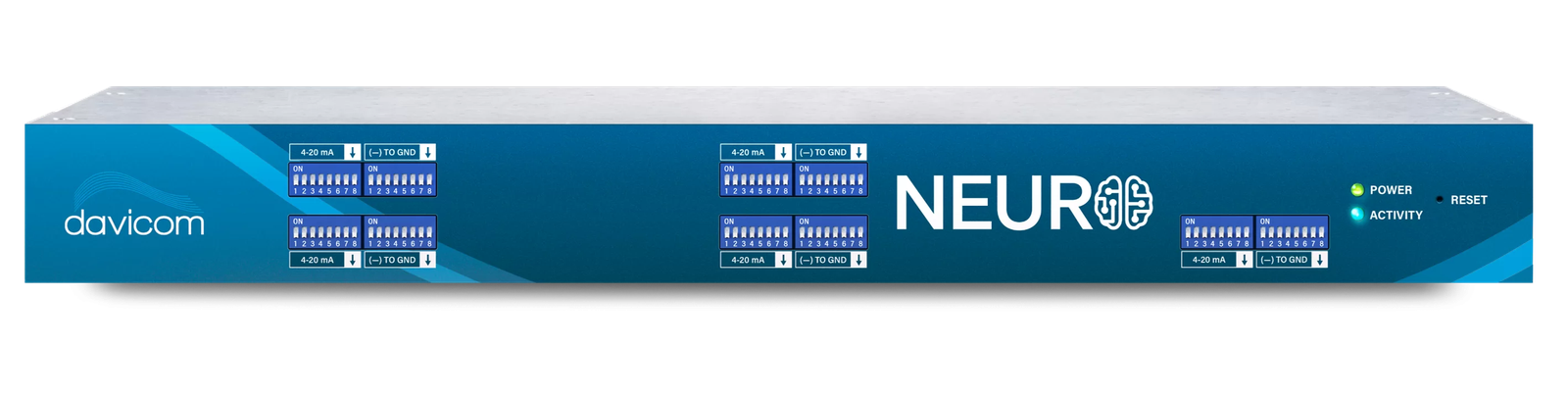
The SM-NEURO is in effect multiple programmable intelligent RTUs in a single package, delivered already 90 percent programmed: adjust the inputs and outputs to match each site and it is ready for service. Whether you need two sites or hundreds, it works stand-alone or peer to peer, and it may be polled and manually controlled by the SM-CORTEX master for total management, displays, logs, alarms and notifications.
With local site management, the SM-NEURO is the only required component at a co-located pump, valve or tank site.
Every event logged
Stop and think about what you really need at a site, instead of what your current limitations allow. The SM-NEURO provides hundreds of features with a built-in calendar, timers, counters, math functions, sunrise and sunset calculations, event logging, pump and valve rotation management, and remote control.
Analog ports
12 bit resolution: 2048 levels against 256 at 8 bit. Up to 40 in one SM-NEURO.
- Water levels, by transducer
- Water flow
- Temperature and humidity
- Battery and power levels, with automatic switching to backup
- Solar charging levels
- Lightning detection
- Radio power output and antenna efficiency
- HVAC monitoring and efficiency
- Control of relays, locally or at other sites
Digital ports
Negative or positive logic switching. Up to 40 in one SM-NEURO.
- AC power failure, where AC is present
- Security and entry
- Pulse counters
- Control relays or relay outputs driving digital inputs
- Monitoring functions, such as radio keying and time in use
- Anything that has a logic shift; you will think of a lot more
Relay outputs
5 available, in NO-C-NC (SPDT) configuration.
- Valves, pumps, lights, security, or any other on-off function
- Actuated locally or remotely, by an SM-NEURO or by the CORTEX master
- Switching radio channels or backup power
- Pulse counting and monitoring functions
- Anything you wish to command
Every input and output can participate in local rules, so a level, a switch and a relay become a working control loop without any master in the path.
The intelligence is in the field
Each operation in your system is a stand-alone sub-system. Why send a request to the commander at headquarters and wait for its decision, when the intelligence is in the field and can work efficiently and autonomously, even if every other sub-system were down?
A tank needs water, or a sewage level is running too high. The tank requests its peer, in the same or a remote location, to open a valve or start pumps to fill the tank. Completed in seconds, with no master in the path.
Peer distances are typically closer than the path back to a master, so radio signals are stronger and commands travel as short bursts of digital traffic, acknowledged without multiple repeats or channel collisions. The digital radios carry a purpose-built algorithm to prevent collisions, and a complete command travels in just 12 bits of data.
The SM-NEURO also calls the SM-CORTEX master with any alarms or anomalies, so call-out procedures and handling efficiency stay centralized even while control stays local.
A whole site on a 12 V battery
Low power consumption allows the SM-NEURO, the digital radio and the SCADA components to be powered from a 12 VDC battery. Solar power and battery can be configured to completely power a SCADA MASTERS RTU site, with no mains connection at all.
| Load | Draw at 12 VDC |
|---|---|
| SM-NEURO | 150-300 mA maximum |
| Radio, receive | 100 mA |
| Radio, transmit | 2-7 A, short bursts |
| SM-CORTEX 320 | 275 mA |
Browser based, end to end
All SCADA MASTERS products are browser based, so total management and changes are made with a low-level computer, using the browser you already run. On-site monitoring, adjusting and management are at your fingertips.
Configuration you can hold
Each RTU and MTU site keeps its configuration in a file that may be stored on a PC, or even a thumb drive, and reloaded in a few seconds. One backup NEURO can be programmed for a specific site and put into service rapidly if disaster strikes.
Deployable backup solution
NEURO, radio, power supply and battery, ready to connect to sensors and an antenna at any site, or powered from a vehicle. Load the site configuration and go. Waterproof case with wheels and a pull handle, airplane carry-on size.
Together these mean the recovery plan is not a service call: it is a file, a spare unit and a case that rolls.
SM-CORTEX 320, the master station
The SM-CORTEX is the complete master remote site management solution, with central monitoring, polling and remote web access. It receives alarms and notifications directly from the SM-NEUROs, polls them for status, and gives an operator full control over every NEURO RTU in the system. Polling requirements are determined by system size.
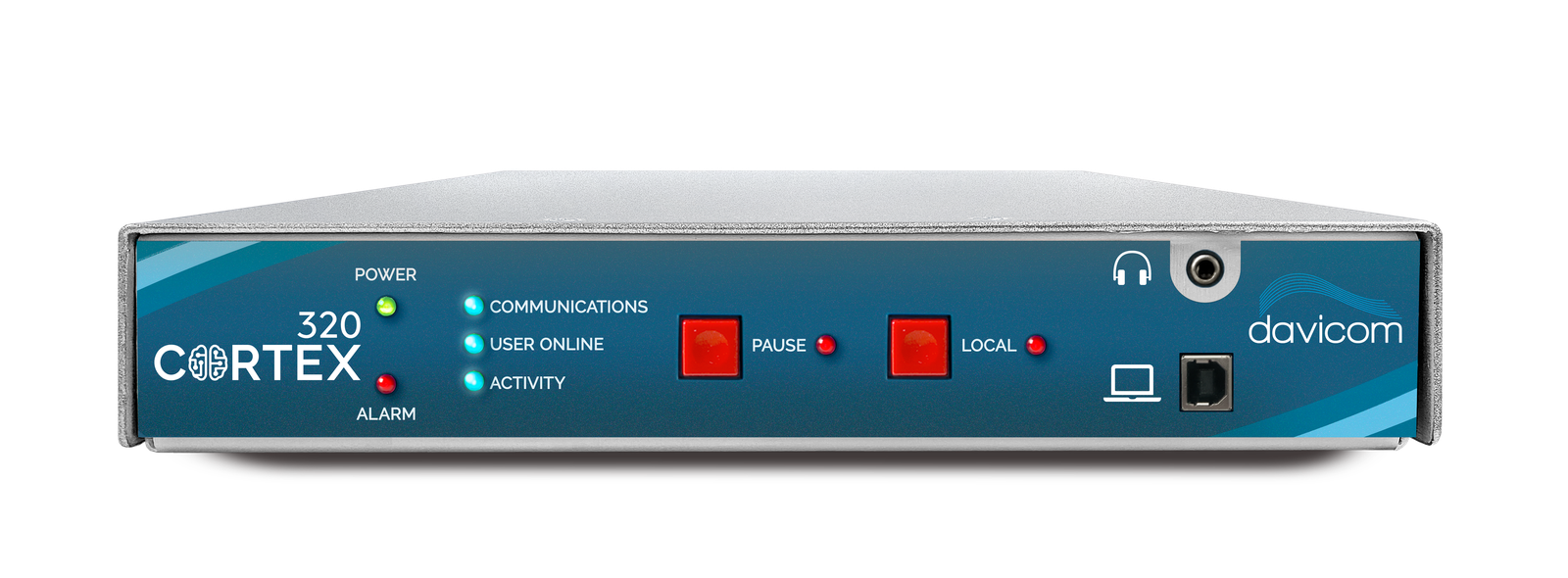
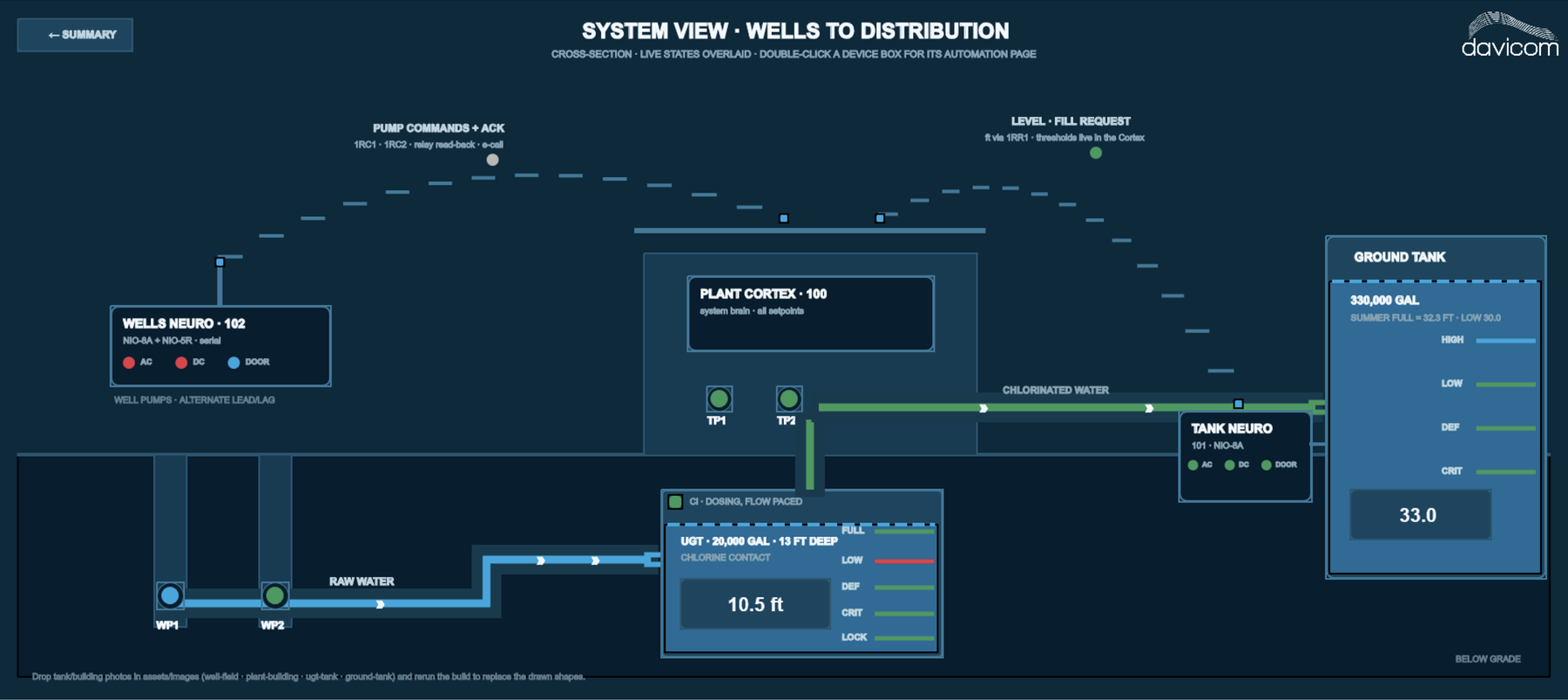
Displays range from simple meter and bar graphics to industry graphics of water tanks, pumps, valves and flow metering. A complete graphics manager is built in, or a library of graphics can be added to match your old system.
Polling retrieves current data and confirms each site is awake and working, and it does not stop when a site fails to answer.
SM-CORTEX 320, inside the box
Hardware
Logic and alarming
Alarm modes
Voice, SMS, email with TXT and XML attachments, SNMP trap, smartphone notification, pager, fax, and DavNet over dial-up and IP. Activity monitoring and cumulative run time are kept on all inputs, so a pump that is drifting toward failure shows up in its hours before it shows up as an alarm.
Warranty. SM-NEURO, SM-CORTEX and the digital radios provided by SCADA MASTERS carry a two-year limited factory warranty against defects in manufacturing, per published specifications. Details at scadamasters.com.
What a deployed system looks like
Typical RTU sites include water tanks of any style, valve pits and stations, pump stations, and flow measurement locations. Additional sensors are available as an option from SCADA MASTERS.
The client provides sensors, AC power, network, existing cabinetry and antenna systems in accepted and proper order. SCADA MASTERS and the client determine the graphical display interface and the polling requirements together.
Access and security
The SM-CORTEX provides a variety of alarm methods and remote access for management, with multi-level security. The system is browser based and allows access to anyone permitted, either locally on the internal network or remotely via app or VPN.
Exact components for every site are listed in the quotation and in any contract, so what is delivered is what was written down, line by line.
Value added for integrators
SCADA MASTERS works with manufacturers representatives, dealers, integrators and self-maintained clients. Here is what an integrator gains from the partnership.
Easy-to-program, browser-based software
Built-in configuration tools. No proprietary software to license, install or train around.
RF engineering expertise
Designed and supported by experienced radio engineers.
FCC licensing support
Guidance through licensing requirements and compliance.
High-performance dipole antennas
Optimized for reliable long-range communications.
Radio systems built to perform when cellular fails
Mission-critical communications without cellular dependency, which is the reason this product line exists.
Antennas
SCADA MASTERS delivers rugged, broad-bandwidth folded dipole antennas at a very competitive price, with free shipping on orders over $500.
For the reseller. The system you sell is the system you can support: browser-based configuration, documented I/O, and an engineering partner on the radio side.
Point to point, and point to multipoint
RF engineering and analysis supports VARs, dealers and end users in designing radio systems that meet standards and work properly, using low-cost, reliable, geo-based propagation. Multiple studies are run for the same sites, proving the required antenna height and power for the desired location before anything is bought or built.
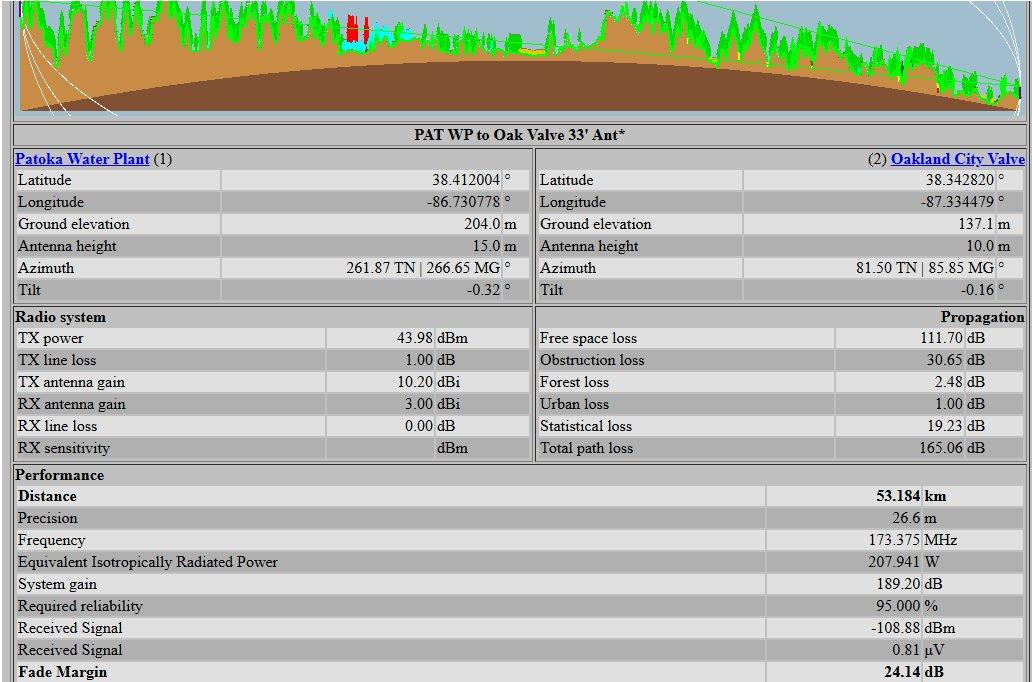
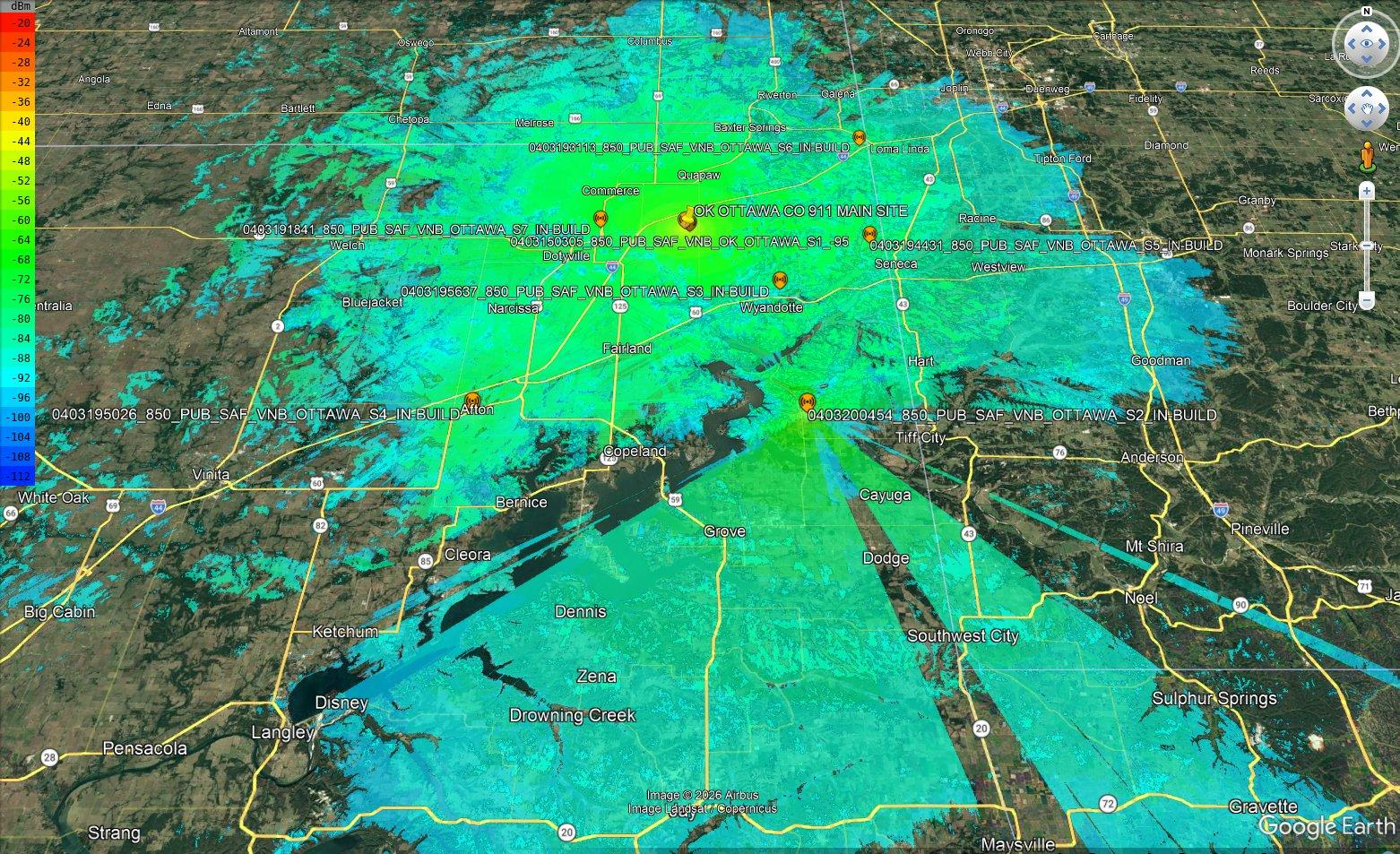
The same studies serve fresh and wastewater utilities, and they are what turns an antenna quotation into an engineering answer: this height, this power, this margin.
 SCADAMASTERS, LLC
Locally represented,
coast to coast
With representatives across the United States, Puerto Rico and the Virgin Islands.